Kling 3.0: AI Video Generation with Native Audio, Smart Storyboard, and Subject Consistency
Kling 3.0 is KlingAI's latest AI video generation model. It produces video with synchronized audio from text prompts or images, plans multi-shot sequences automatically through its smart storyboard system, and keeps character identity stable across camera changes using subject references. Kling 3.0 Omni adds role-directed speech and multilingual lip-sync for dialogue-heavy scenes.
| 15s | Maximum generation duration in Kling 3.0 / 3.0 Omni |
| 5 Languages | Chinese, English, Japanese, Korean, and Spanish plus dialect support |
| Smart Storyboard | Prompt-aware shot planning, camera position shifts, and dialogue rhythm support |
| Subject Control | Anchor key characters, props, and scenes across changing camera motion |
What Changed in Kling 3.0
Kling 3.0 adds several capabilities that Kling 2.6 and O1 did not have. The core changes are: the model now generates audio alongside video, it can plan multi-shot sequences from a single prompt, and it accepts subject references to lock character appearance across shots.
- Smart Storyboard Control: Kling 3.0 reads your prompt and infers shot transitions, camera positions, and dialogue pacing. You describe the story; the model plans the shot list.
- Native Audio-Visual Output: Video and audio are generated together. Lip movement matches speech, and ambient sound matches the scene, so there is less need for audio post-production.
- Role-Directed Speech: In scenes with multiple characters, you can specify who says what. The model assigns voice and lip motion to each speaker separately, reducing confusion when three or more people are on screen.
- Subject References: Attach extra images or video clips as subject references. Kling 3.0 uses them to keep specific characters, props, or locations visually stable even as the camera angle changes.
- Multilingual and Dialect Support: Kling 3.0 supports Chinese, English, Japanese, Korean, and Spanish, including regional accents. Characters can switch languages mid-scene with accurate lip-sync.
- On-Screen Text Preservation: The model preserves readable text in the scene, including signboards, product labels, and subtitles. This matters for e-commerce AI video generation where text clarity affects conversion.
Kling 2.6 / O1 vs Kling 3.0 / 3.0 Omni
| Capability | Kling 2.6 / O1 | Kling 3.0 / 3.0 Omni |
|---|---|---|
| Text-to-video | Supported | Supported |
| Image-to-video | Supported | Supported |
| Start + end frame generation | Supported | Supported |
| Custom smart multi-shot control | Limited / Not native | Supported |
| Subject reference integration | Not available | Supported |
| Three-plus character reference disambiguation | Not available | Supported |
| Multilingual speech + dialects | Limited | Supported |
| Maximum duration | Up to 10s (O1 docs) | Up to 15s |
How to Use Kling 3.0 for AI Video Production
A three-step workflow for using Kling 3.0 AI video generation in practice:
- Write the Story Prompt: Describe scene transitions, speaking roles, and emotional tone. The smart storyboard system reads this structure and plans the shot sequence.
- Attach Subject References: Upload image or video references for characters, props, and locations that need to look consistent across shots. This is the text to video or image to video starting point.
- Generate and Iterate: Kling 3.0 renders up to 15 seconds of video with native audio. Review the output, adjust your prompt or references, and regenerate until the result matches your intent.
Best Use Cases for Kling 3.0 AI Video Generation
- Brand Ads and E-Commerce: Generate product videos where readable on-screen text and stable character appearance affect conversion. Kling 3.0's text preservation and subject consistency handle this directly.
- Short Dramas and Sketches: Build dialogue scenes with automatic shot transitions, per-character voice assignment, and language switching in a single generation. The smart storyboard takes care of shot/reverse-shot patterns.
- Social Campaign Localization: Reuse the same visual assets and swap spoken language and accents for different markets. Kling 3.0's multilingual support covers Chinese, English, Japanese, Korean, and Spanish.
- Previsualization: Prototype camera rhythm, performance direction, and narrative pacing before committing to full production. At 15 seconds per generation, Kling 3.0 produces enough footage to evaluate a sequence.
How Kling 3.0 AI Video Generation Works in Practice
Based on the official Kling 3.0, Kling 3.0 Omni, and Subject Library documentation, the workflow change matters more than raw quality gains. Prompts now control shot structure, references stabilize identity, and audio stays aligned with who is speaking.
- 1) Multi-Shot Story Logic: Kling 3.0 generates sequences, not just single clips. Define shot-by-shot moments in your prompt and the model manages transitions, framing, and pacing between them. This is how the smart storyboard feature works in practice.
- 2) Subject Locks for Characters and Products: Attach subject reference images so the model keeps specific people, props, or locations visually identical across shots. This is what makes Kling 3.0 useful for brand campaigns and series content where continuity matters.
- 3) Audio Generated With Video: Native audio output means the model produces speech, ambient sound, and music alongside the video frames. Lip-sync and expression alignment happen during generation, not in post. For multilingual content, this removes an entire editing step.
- 4) 15-Second Duration Control: Kling 3.0 generates up to 15 seconds with flexible duration settings. That is enough to fit setup, action, and reaction in a single output instead of stitching micro-clips together.
Kling 3.0 Prompt Guide: How to Write Effective Prompts
Use this structure when writing prompts for Kling 3.0 AI video generation. It helps with shot coherence, subject consistency, and speaking-role control.
- Scene Anchor: Start with location, time, weather, and mood. This sets visual logic before action begins.
- Subject Anchor: Name each key actor or object clearly and reference visual identity details you must keep stable.
- Shot Plan: Define shot-by-shot camera behavior: wide, medium, close-up, tracking, or POV. Keep each shot intentional.
- Performance Direction: Specify emotion, gestures, and speaking order so dialogue scenes remain readable and role-consistent.
- Audio Direction: Set language, accent style, and tone per character when multilingual delivery matters.
- Output Constraints: Add duration, aspect ratio, and quality targets at the end to keep technical output aligned with distribution goals.
Kling 3.0 Example Library: Text to Video and Image to Video Prompts
These examples show Kling 3.0 AI video generation across dialogue, action, commerce, multilingual speech, and subject consistency use cases.
Example 01: Bilingual Terrace Dialogue
Inspired by the official multi-shot conversation style in the docs.
欧洲别墅户外露台场景,铺着蓝白格纹桌布的餐桌旁,年轻白人女性穿蓝白条纹短袖衬衫、卡其色短裤,系棕色腰带,赤脚坐着,对面是穿白色 T 恤的年轻白人男性,镜头推进,女性晃着玻璃杯里的果汁,目光望向远处的树林,说"These trees will turn yellow in a month, won't they?",镜头特写男性低着头说,"but they'll be green again next summer.",然后女性转头,笑着看向对面的男性,说,"Are you always this optimistic? Or just about summer?",然后男性抬起头,看着女生说,"Only about summers with you。"
A European villa outdoor terrace scene. Beside a dining table covered with a blue-and-white checkered tablecloth, a young white woman wearing a blue-and-white striped short-sleeve shirt, khaki shorts, and a brown belt sits barefoot. Across from her is a young white man wearing a white T-shirt. The camera pushes in. The woman gently swirls the juice in her glass, gazes toward the distant woods, and says, "These trees will turn yellow in a month, won't they?" A close-up shot shows the man lowering his head and saying, "but they'll be green again next summer." Then the woman turns her head, smiles at the man across from her, and says, "Are you always this optimistic? Or just about summer?" Then the man raises his head, looks at the woman, and says, "Only about summers with you."

Example 02: Six-Shot Snowmobile Sequence
Matches the custom storyboard concept shown in Kling docs.
镜头 1-后远景低角度跟拍,骑手向前驶去 镜头 2-侧方低角度近景,特写摩托车车轮 镜头 3-骑手第一人称主观视角,前方是摩托车车把和表盘 镜头 4-正面中景迎向摩托跟拍,骑手头盔正对镜头 镜头 5-侧方平拍跟拍(轻微跟移) 镜头 6-高空微俯远景,镜头拉高,拍雪地摩托向雪原深处行驶,车辙在纯白雪地上划出蜿蜒的线条,两侧散布着落满雪的森林
Shot 1 – rear long shot, low angle tracking, the rider drives forward. Shot 2 – side low-angle close shot, close-up of the motorcycle wheel. Shot 3 – rider's first-person subjective POV, the motorcycle handlebars and dashboard are in front. Shot 4 – frontal medium shot tracking toward the motorcycle, the rider's helmet faces the camera directly. Shot 5 – side eye-level tracking shot (slight lateral movement). Shot 6 – high-altitude slightly top-down long shot, the camera rises, filming the snowmobile driving into the depths of the snowfield; the tracks carve winding lines across the pure white snow, with snow-covered forests scattered on both sides.

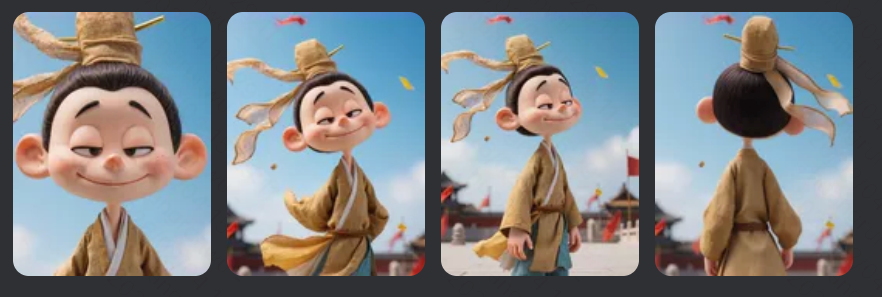
Example 03: Subject Library Character Intro
For reusable character identity across future clips.
镜头 1,3秒,中景,正面。[@shirt-boy] 从山坡上走下来,在 [@图片1] 的电线杆旁坐下。 镜头 2,3秒,近景,面部特写。[@shirt-boy] 靠在电线杆上说:"今天的风比昨天温柔了一些……连草叶都变得温柔了。" 电影质感。 镜头 3,2秒,侧面近景,面部特写。[@shirt-boy] 闭上眼睛,阳光轻轻洒在脸上。 镜头 4,2秒,俯拍。[@shirt-boy] 仰面躺下,草叶覆盖衬衫,双手枕在脑后望向蓝天,说:"希望这样的夏天永远不要结束。"
Shot 1, 3s, medium shot, frontal view. [@shirt-boy] walks down from the hillside and sits by the pole in [@Image 1]. Shot 2, 3s, close shot, facial close-up. [@shirt-boy] leans against the pole and says, "Today's wind is a bit softer than yesterday… even the blades of grass have become gentle." Cinematic texture. Shot 3, 2s, side close shot, facial close-up. [@shirt-boy] closes his eyes, with sunlight lightly falling on his face. Shot 4, 2s, top-down shot. [@shirt-boy] lies back, grass leaves covering his shirt, arms resting behind his head as he looks up at the blue sky, and says, "I hope a summer like this will never end."

Example 04: Two-Subject Interaction Scene
Built for multi-character consistency and action continuity.
镜头 1:镜头跟随 [@banana_cat] 漫步东京街头,偶遇 [@asian_girl],跃入她的怀中。 镜头 2:[@asian_girl] 坐在 [@图片1] 的沙发上看书。[@banana_cat] 在沙发上顽皮地用头顶女孩手中的书。镜头推进,展现两人安静和谐的画面。
Shot 1: Camera follows as [@banana_cat] strolls through the streets of Tokyo, happens to encounter [@asian_girl], and leaps into her arms. Shot 2: [@asian_girl] sits on the sofa from [@Image1], reading a book. [@banana_cat] playfully nudges the book in the girl's hands on the sofa. The camera pushes in, revealing their quiet and harmonious scene.


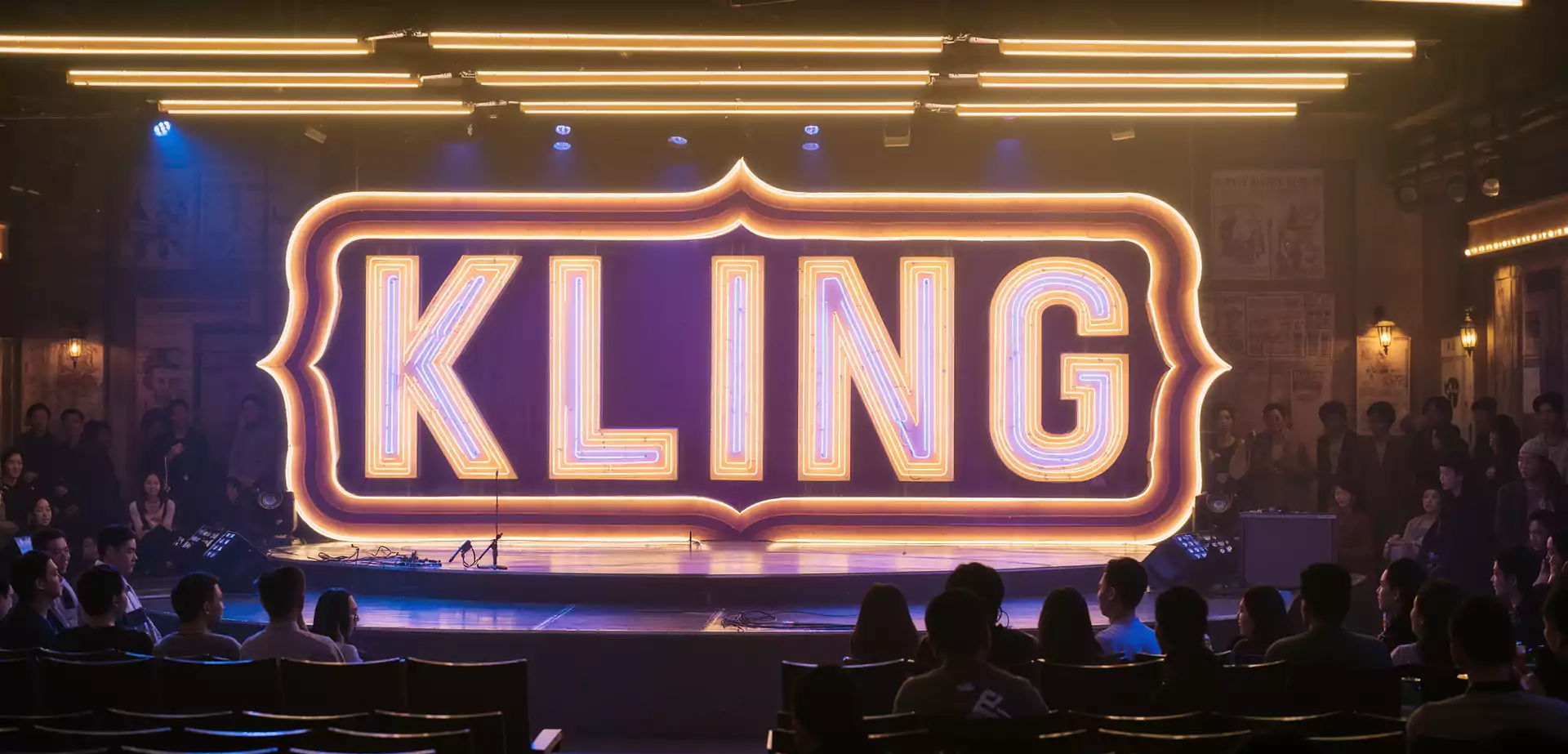
Example 05: Stand-Up Stage with Voice Persona
Useful for creators running repeat comedy characters.
镜头 1,3秒,中近景脱口秀舞台 [@tiny-scholar]。背后是一块复古大霓虹灯招牌写着"KLING"。暖金色侧逆光勾勒主体轮廓。中景,镜头跟随演员走向麦克风,手指轻扶麦克风架并微调高度。 镜头 2,4秒,半身中近景 [@tiny-scholar],开口说:"我居然输给了 Kid。他才干了几天,就教大家怎么在工作中找快乐。" 镜头 3,4秒,[@tiny-scholar] 表情克制带着些许嘲讽,自然停顿,"你听听——花五分钟去证明这么一个伪命题。" 镜头 4,2秒,切到观众大笑。
Shot 1, 3s, medium close shot on an open-mic stand-up comedy stage [@tiny-scholar]. Behind is a large vintage neon sign reading "KLING". Warm golden side backlighting outlines the subject. Medium shot, the camera follows the performer as they walk to the microphone, lightly supporting the mic stand with their fingers and slightly adjusting the height. Shot 2, 4s, half-body medium close-up [@tiny-scholar], opens and says, "I actually lost to Kid. He's worked for a few days and teaches everyone how to be happy at work." Shot 3, 4s, [@tiny-scholar] with a restrained expression and slight mockery, a natural pause, "Listen to this — spending five minutes to prove such a pseudo-proposition." Shot 4, 2s, cut to the audience laughing loudly.
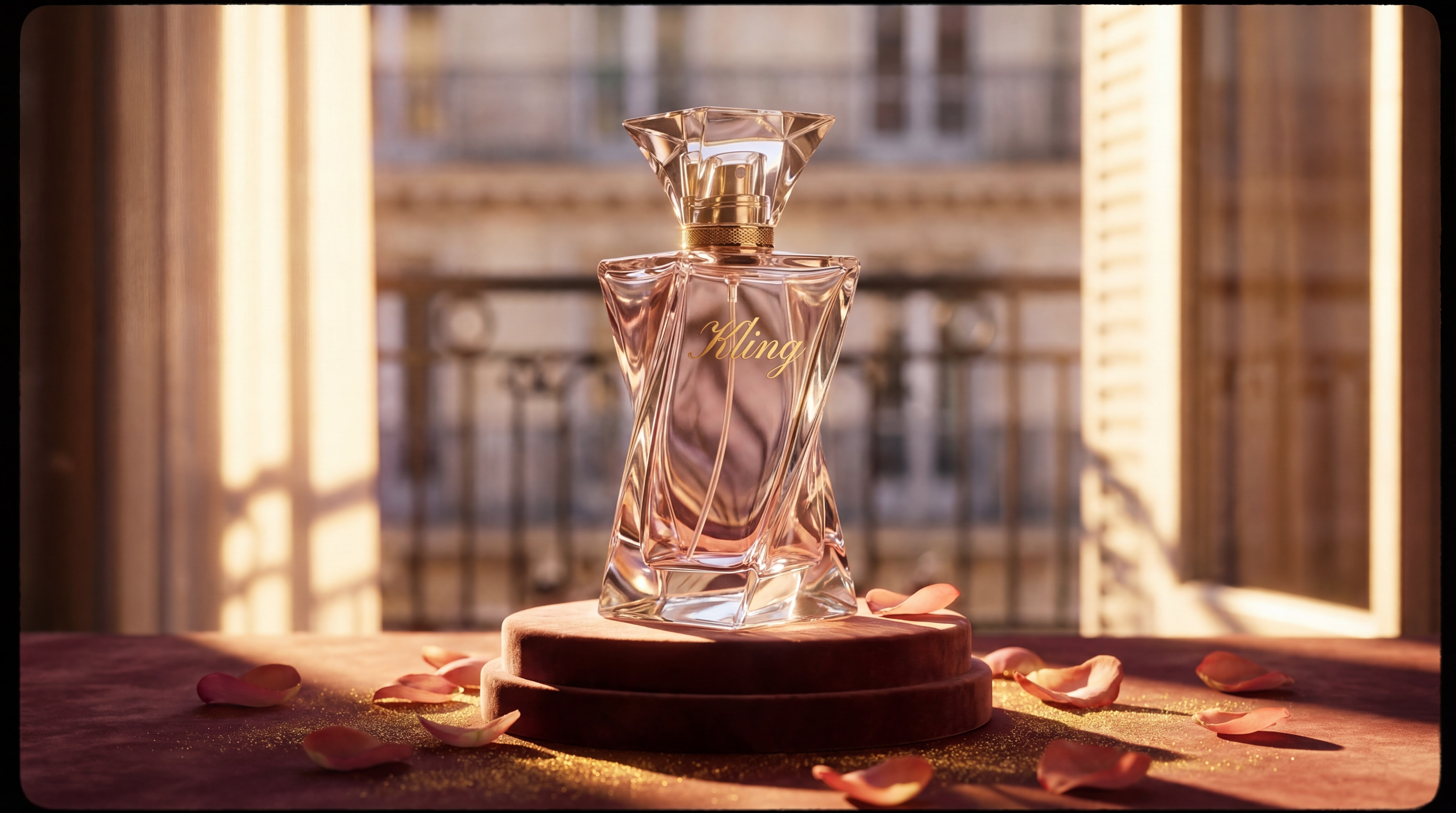
Example 06: Native Text Preservation — Parisian Perfume Ad
Demonstrates native text rendering that preserves signage, labels, and engraved text on products throughout camera movement. Ideal for e-commerce and luxury brand advertising.
巴黎公寓窗边场景下,背景有轻柔的法式钢琴 BGM,午后鎏金阳光透过百叶窗洒在香水瓶上,形成斑驳光影。镜头从散落的玫瑰花瓣缓缓推进,焦点移向 Kling 香水瓶的切割面,旁白(慵懒法式女声,英式口音,语速舒缓):Bathe in the golden hour. 镜头慢动作环绕香水瓶,捕捉金色刻字与瓶身的光影流动,旁白:Kling, a whisper of Parisian elegance. 镜头拉远定格完整场景(香水瓶立于丝绒台座,窗外巴黎建筑若隐若现),旁白:Wrap yourself in luxury with every breath.
A Parisian apartment window scene. Soft French piano BGM in the background. Golden afternoon sunlight filters through shutters onto a perfume bottle, casting dappled light. The camera slowly pushes in from scattered rose petals, focusing on the cut facets of the Kling perfume bottle. Voiceover (languid French female voice, British accent, slow pace): "Bathe in the golden hour." The camera orbits the perfume bottle in slow motion, capturing the golden engraved lettering and light flowing across the glass surface. Voiceover: "Kling, a whisper of Parisian elegance." The camera pulls back to frame the full scene — the perfume bottle standing on a velvet pedestal, Parisian architecture faintly visible outside the window. Voiceover: "Wrap yourself in luxury with every breath."
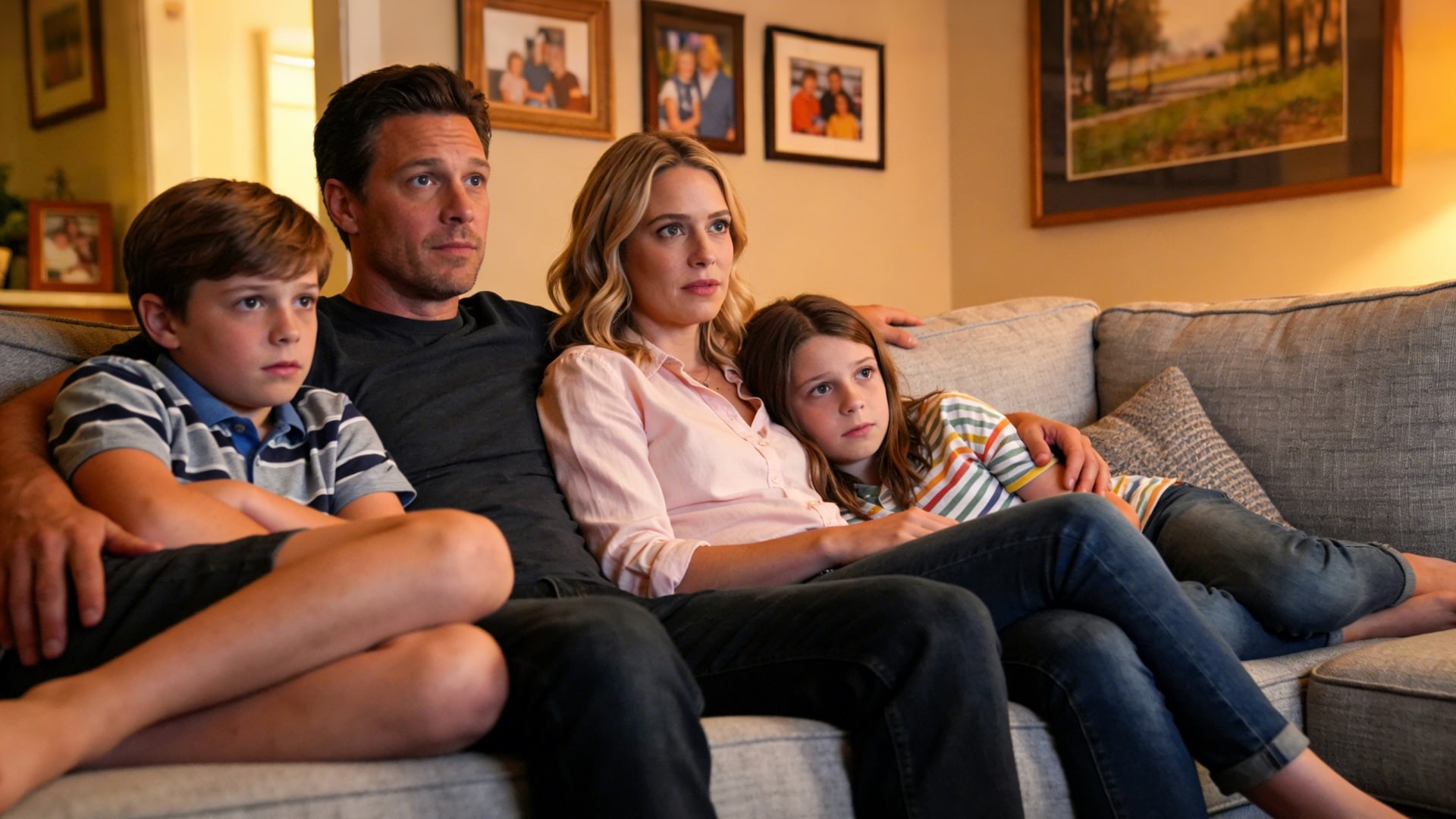
Example 07: Multi-Role Dialogue — Family Movie Night
Demonstrates role-directed speaking with four characters in a single scene. Each family member speaks in turn with distinct tone and emotion.
居家环境,背景有轻微的客厅空调出风音,贴合写实日常。妈妈(轻声感慨,语气惊讶):Wow, I didn't expect this plot at all.爸爸(低嗓附和,语气平淡):Yeah, it's totally unexpected, never thought that would happen. 男孩(语气雀跃):It's the best twist ever! 女孩(跟着点头,语气激动):I can't believe they did that!
A cozy living room setting with subtle air conditioning hum in the background, matching a realistic everyday atmosphere. Mom (soft exclamation, surprised tone): "Wow, I didn't expect this plot at all." Dad (low voice chiming in, calm tone): "Yeah, it's totally unexpected, never thought that would happen." Boy (excited tone): "It's the best twist ever!" Girl (nodding along, thrilled tone): "I can't believe they did that!"
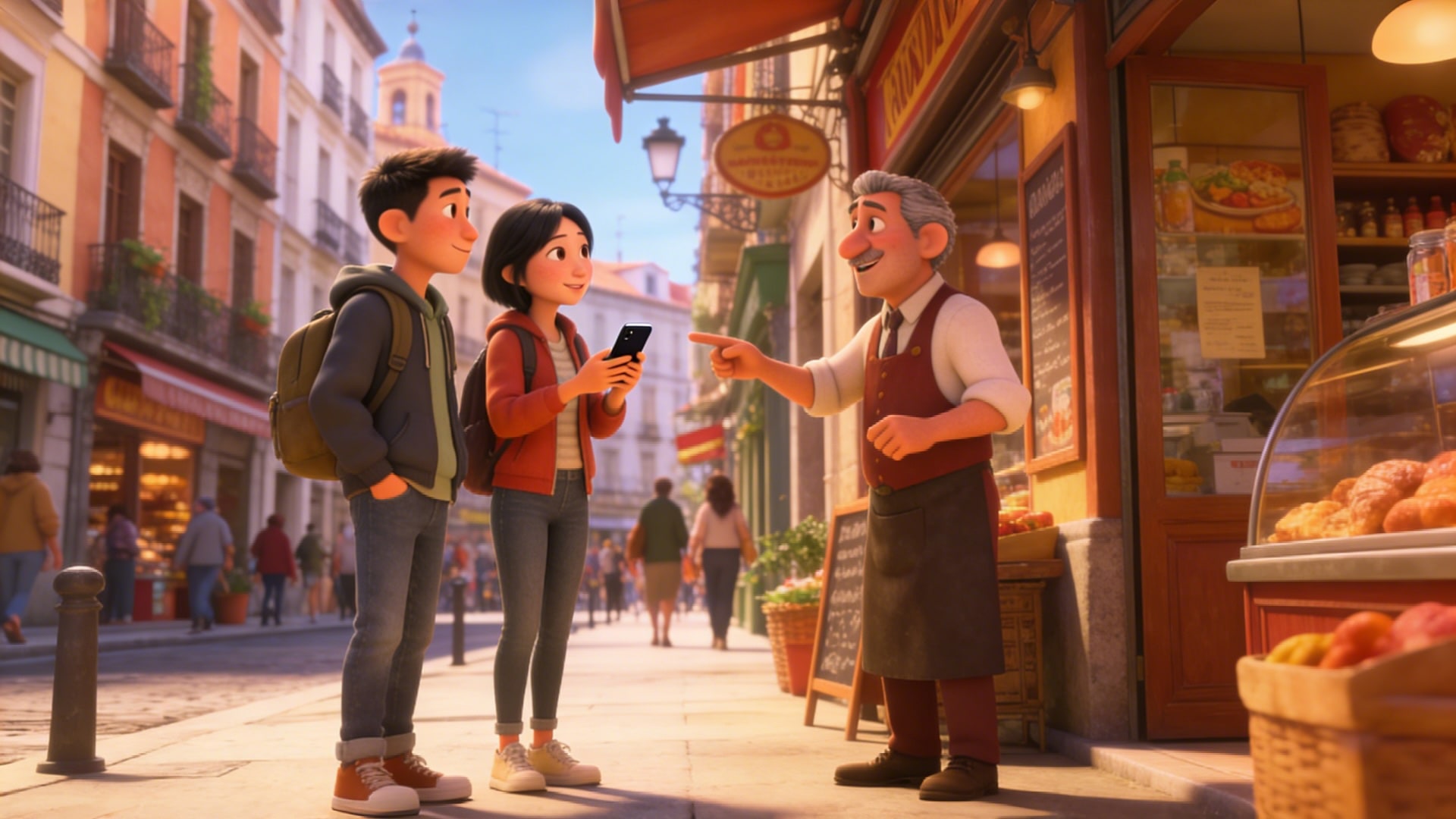
Example 08: Multilingual Scene — Madrid Street Encounter
Demonstrates multilingual generation with Chinese tourists and a Spanish shopkeeper, mixing Spanish dialogue with natural lip-sync and accent rendering.
阳光洒满马德里老街,街边面包店前,女生中国游客和穿灰色连帽衫的男生一起走向店员,两人面带礼貌微笑。女生游客(语速稍缓,带蹩脚口音,西班牙语):Disculpe, ¿dónde está la plaza mayor? 白发西班牙店员(侧身指向前方,语气轻快,西班牙语):Por allí, a dos calles. Muy cerca. 女生游客点头致谢,男生游客也跟着点头附和(西班牙语):Muchas gracias. 店员微笑点头回应,两人转身朝向指示方向走去。
Sunlight fills the old streets of Madrid. In front of a street-side bakery, a female Chinese tourist and a male companion in a grey hoodie walk toward the shopkeeper, both with polite smiles. Female tourist (slightly slow pace, halting accent, in Spanish): "Disculpe, ¿dónde está la plaza mayor?" White-haired Spanish shopkeeper (turning to point ahead, cheerful tone, in Spanish): "Por allí, a dos calles. Muy cerca." The female tourist nods in thanks. The male tourist also nods along (in Spanish): "Muchas gracias." The shopkeeper smiles and nods in reply. The two turn and walk in the direction indicated.
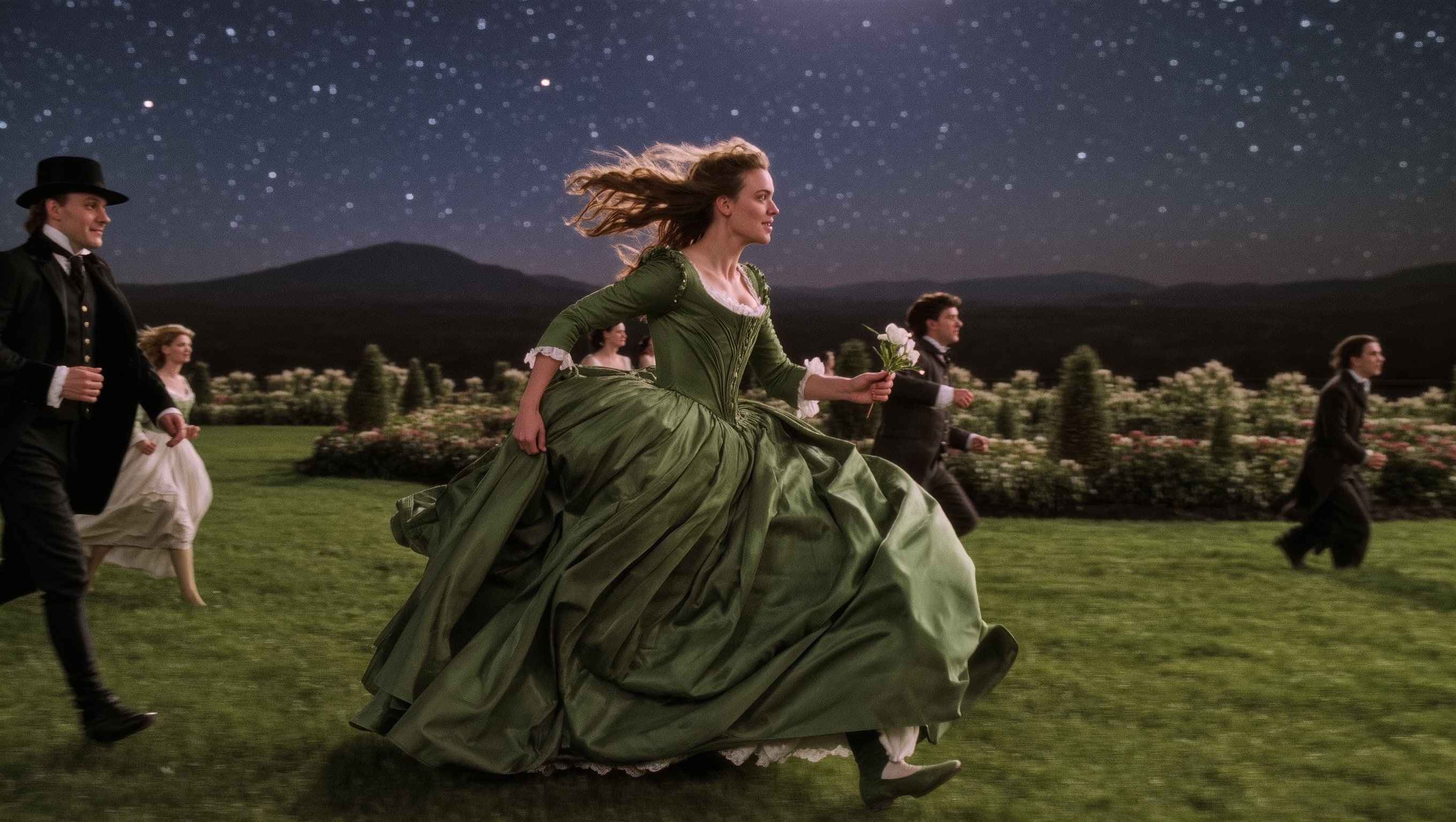
Example 09: 15-Second Cinematic Long Take — Moonlit Garden Chase
A full 15-second single-take generation demonstrating complex action choreography, multiple characters entering frame, emotional transitions, and continuous camera movement without cuts.
超广角中远景横向跟拍开场,稳定器低位贴地运动,冷蓝夜色与银白星空形成高对比的浪漫电影色调,带强烈诗意现实主义与古典史诗气质;主体为身穿墨绿色长裙的年轻女性,在月光照亮的花园草地上全力奔跑,裙摆被风掀起形成汹涌的动态曲线,右手紧握一朵白色小花,左手提起裙角,呼吸急促却目光坚定;第 4 秒,镜头随着她向前加速,背景多名身着旧时代礼服的男女从左右两侧陆续闯入画面,与她并行奔跑,有人试图靠近、有人回头呼喊,却无人真正触碰到她,暗示追逐与逃离;第 8 秒,镜头逐渐拉近至中景摇至主角前方跟拍并略微抬升,她回头短暂看向身后一名年轻的男性角色,两人目光交汇一瞬,情绪在奔跑中爆发,女子和男子牵着手共同蹦跑;第 12 秒,音乐与动作达到高潮,镜头紧贴她的侧脸与飞扬发丝前行,她将白花松手抛向空中,花朵在慢速飘落中被后方人群掠过;最后 3 秒,镜头不停,继续向前推进,女子和男子冲出人群,奔向花园尽头的星空,身影逐渐占据画面中心,整体氛围炽烈、浪漫而决绝,像一段关于命运、选择与自由的爆发性叙述。
Ultra-wide mid-to-long lateral tracking shot opens the scene, stabilizer low to the ground, cold blue night sky and silver-white stars create a high-contrast romantic cinematic palette with strong poetic realism and classical epic quality. The subject is a young woman in a dark green gown, running at full speed across a moonlit garden lawn. Her skirt billows in the wind, forming sweeping dynamic curves. Her right hand clutches a small white flower, her left hand lifts the hem of her dress, breathing hard but eyes resolute. At second 4, the camera accelerates with her. Multiple men and women in period formal attire enter the frame from both sides, running alongside her — some try to get close, some look back and call out, but none actually touch her, implying a chase and escape. At second 8, the camera gradually closes to a medium shot, swinging ahead of the protagonist and rising slightly. She briefly looks back at a young male character behind her. Their eyes meet for an instant, emotion erupting mid-run. The woman and the man clasp hands and sprint together. At second 12, music and action reach their climax. The camera stays tight on her profile and windswept hair. She releases the white flower into the air; the blossom drifts in slow motion as the crowd behind rushes past it. Final 3 seconds: the camera never stops, continuing to push forward. The woman and man break free from the crowd, running toward the starlit sky at the garden's edge. Their silhouettes gradually fill the center of the frame. The overall atmosphere is intense, romantic, and resolute — like an explosive narrative about fate, choice, and freedom.
Frequently Asked Questions
What is the maximum Kling 3.0 generation duration?
Kling 3.0 and Kling 3.0 Omni support generation up to 15 seconds with flexible custom duration settings, which is a significant extension from previous model versions. Creators can set precise second counts to match their narrative rhythm without being locked to fixed length presets.
Does Kling 3.0 support both text and image workflows?
Yes. The documentation lists text-to-video, image-to-video, and start/end frame workflows as supported generation modes. All three input types carry over from Kling 2.6, with improved semantic understanding and visual fidelity in Kling 3.0.
How does Kling 3.0 improve character consistency across shots?
Kling 3.0 introduces a subject reference system that allows creators to attach additional image references or video references on top of the starting frame. The model uses these references to anchor specific characters, props, and scene elements, keeping their visual identity stable even when camera angles and shot types change.
Can Kling 3.0 handle multilingual dialogue and code-switching?
Yes. The model natively supports five languages — Chinese, English, Japanese, Korean, and Spanish — and can handle multilingual mixing within a single video. Lip movements and facial expressions stay synchronized with the spoken language.
Does Kling 3.0 support dialects and regional accents?
Yes. Beyond standard languages, Kling 3.0 can render regional dialects and accents with accurate lip-sync and natural expression. This is useful for local storytelling, regional advertising, or any content where authentic spoken flavor matters.
What is the Smart Storyboard feature?
Smart Storyboard is a new capability in Kling 3.0 that reads scene transitions, camera directions, and dialogue beats directly from your prompt. The model can automatically plan shot-by-shot framing — including classic techniques like shot/reverse-shot for conversations — then render the entire sequence in one generation pass without manual post-editing.
Can I reference three or more characters in a single scene?
Yes. Kling 3.0 now supports three-plus character reference disambiguation. You can assign distinct identities and speaking roles to multiple characters within the same scene, and the model will maintain visual and vocal separation for each one.
How does Kling 3.0 handle on-screen text and signage?
Kling 3.0 has improved native text rendering capabilities. Whether preserving existing text from a source image or generating new text content, the model keeps characters crisp and structurally accurate. This is valuable for e-commerce ads, product videos, and any scenario where readable on-screen information is critical.
What is the difference between Kling 3.0 and Kling 3.0 Omni?
Kling 3.0 is the upgraded version of Kling 2.6, while Kling 3.0 Omni is the upgraded version of Kling O1. Both share the same unified multimodal training framework. Kling 3.0 Omni is especially suited for multimodal, voice-aware storytelling with stronger control over speaking roles, references, and cinematic structure.
Can I combine the start frame with subject references?
Yes. Kling 3.0 introduces a "start frame + subject reference" workflow. Provide a starting image to set the initial scene, then attach additional subject images or videos to lock specific character appearances. This gives you scene control and identity control at the same time.
What is Kling 3.0?
Kling 3.0 is an AI video generation model developed by KlingAI. It generates video from text prompts (text to video) or from images (image to video), with native audio output, smart storyboard planning, and subject references for character consistency. Kling 3.0 Omni is the voice-focused variant with role-directed speech and multilingual lip-sync support.
How does text to video work in Kling 3.0?
Write a text prompt describing the scene, characters, camera movement, and dialogue. Kling 3.0 reads the prompt, plans a shot sequence using the smart storyboard system, and generates up to 15 seconds of video with synchronized audio. No image input is required for text to video, though adding subject references improves character consistency.
How does image to video work in Kling 3.0?
Upload a starting image (or a start + end frame pair) and write a text prompt describing the motion and narrative. Kling 3.0 generates video that begins from your image and follows the prompt direction. You can also attach subject reference images separately to lock character appearance throughout the generated sequence.
Who developed Kling 3.0?
Kling 3.0 was developed by KlingAI. The model is available through the KlingAI platform for AI video generation, supporting text to video, image to video, and multi-shot storyboard workflows.
Is Kling 3.0 suitable for commercial video production?
Yes. The subject consistency system keeps product and character appearance stable across shots, which is needed for brand campaigns and e-commerce. Native text preservation keeps on-screen labels and signage readable. Multilingual support covers five languages for localization workflows.